On sewing, community and change: get to know eco-social designer Adele Buffa and her work
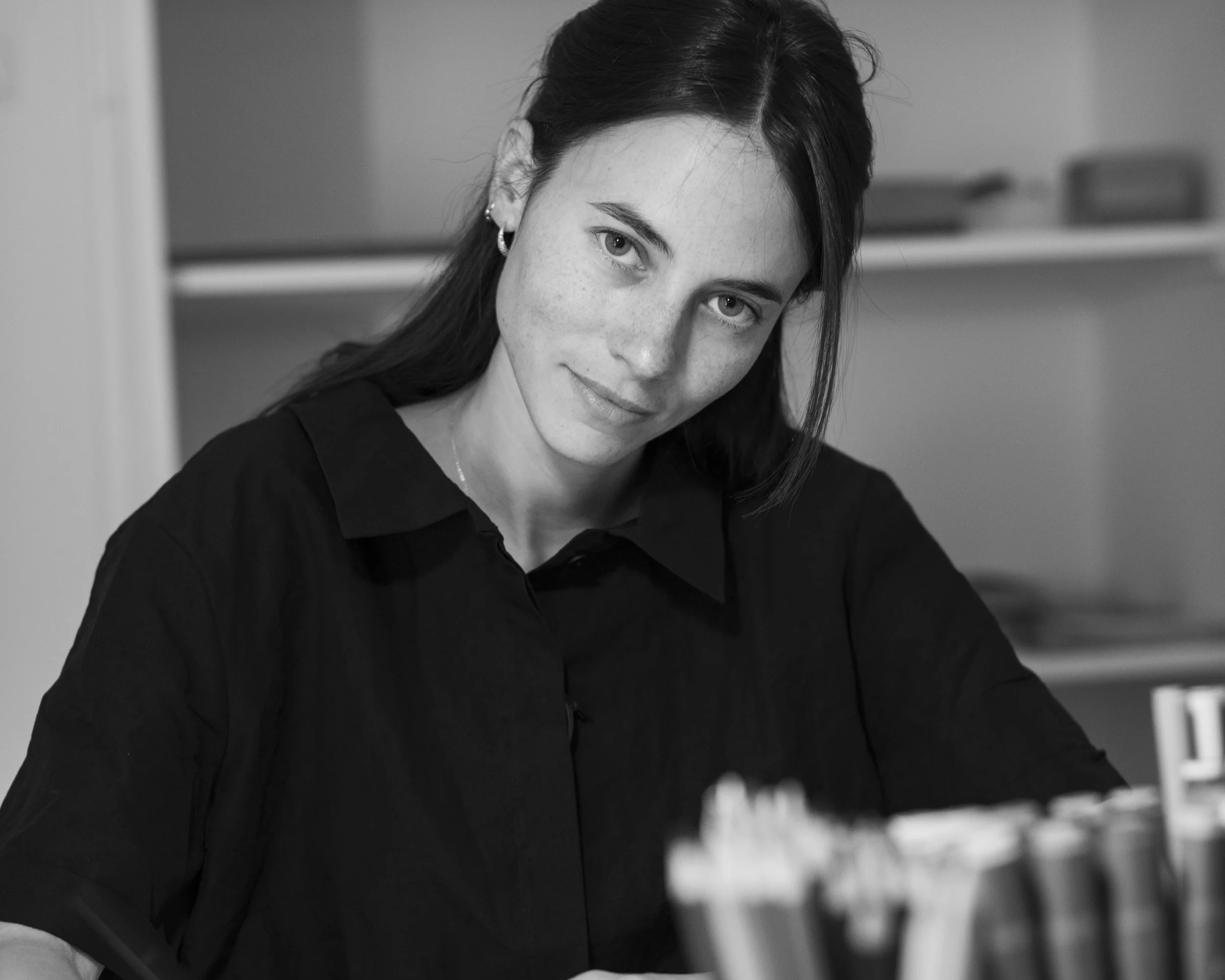
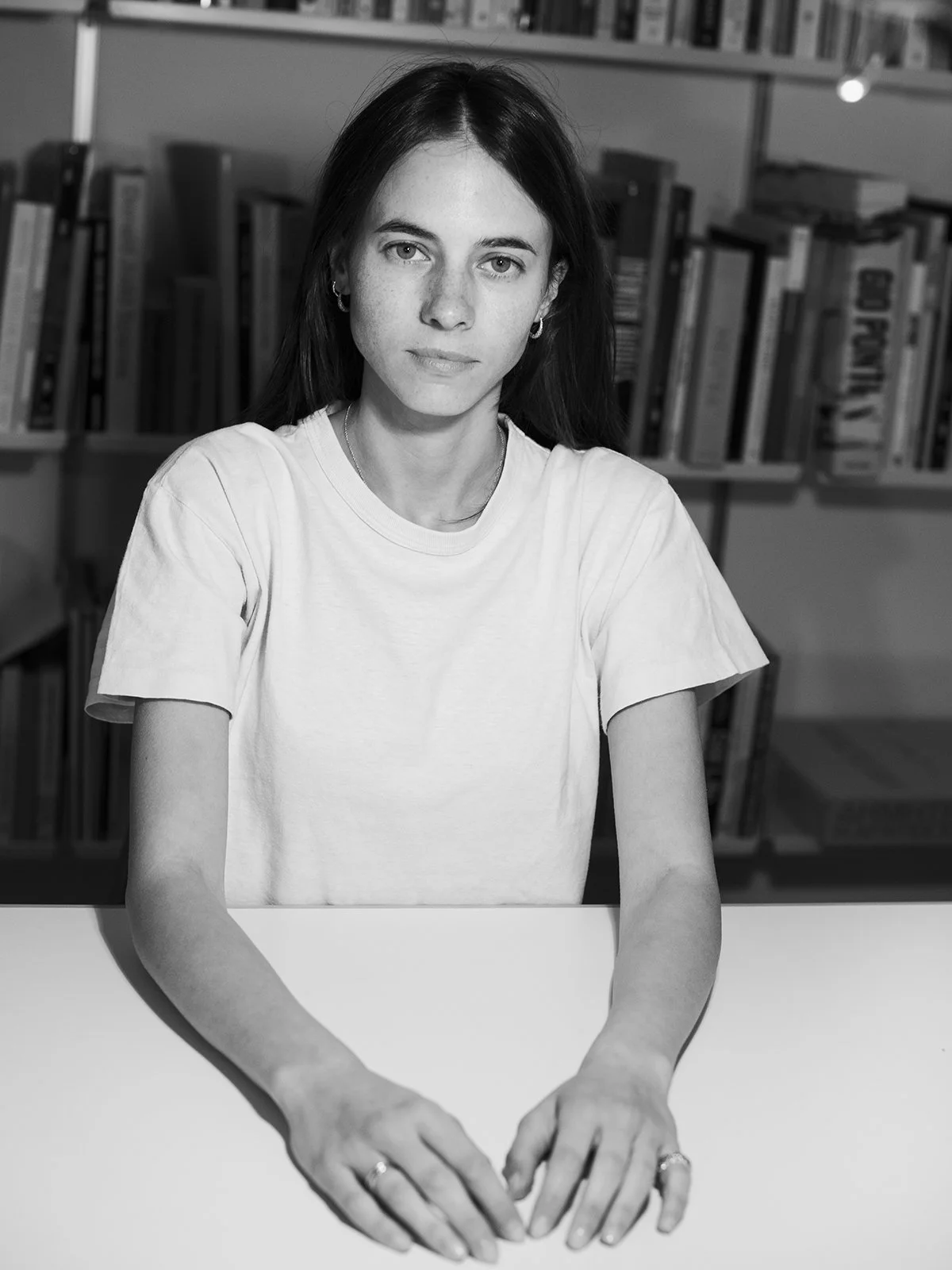
Adele Buffa is an eco-social designer whose work invites us to look at clothing—and the act of making—through a different lens. Rooted in sewing, repair, and participation, her practice goes beyond garments and materials. It creates space for connection, exchange, and new ways of thinking about value, both individually and collectively.
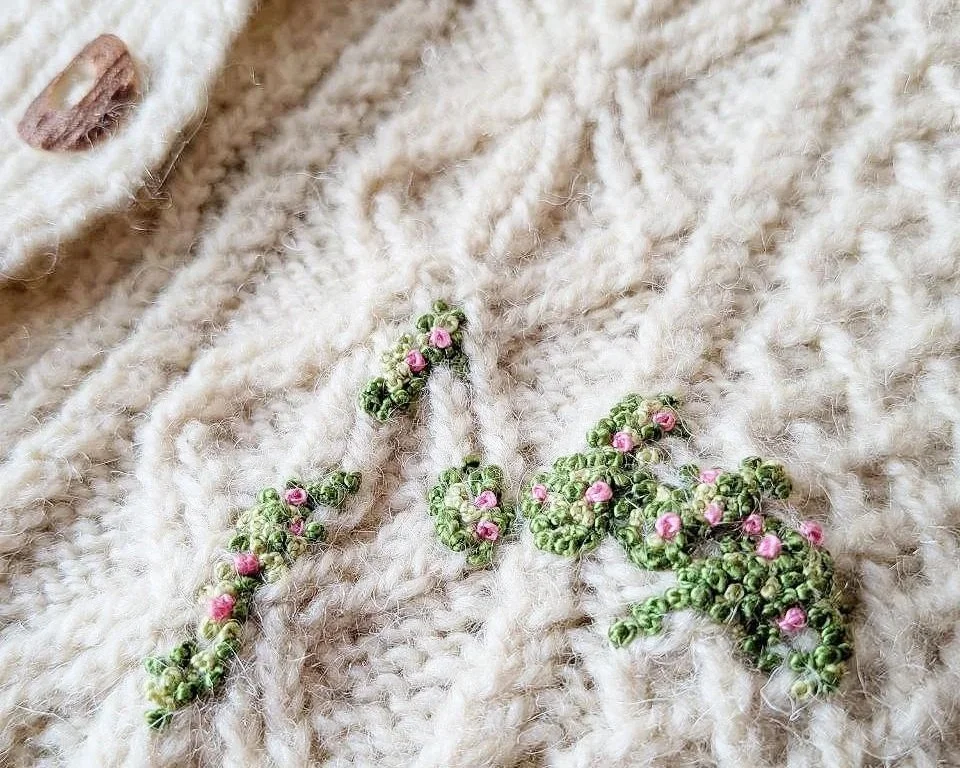
Working across workshops, research, and collaborative projects, Adele brings people together to engage with textiles in a more conscious and creative way. Whether through upcycling, embroidery, or fashion hacking, her approach encourages a slower, more intentional relationship with what we wear and how we live.
In many ways, her work reflects what we explore in this issue of heiter: the idea of blooming. Not as a sudden transformation, but as something that unfolds over time—through small actions, shared experiences, and a willingness to see things differently.
In this conversation, we speak to Adele about sewing as a tool for change, the power of community, and how working with our hands can reconnect us to ourselves and the world around us.
heiter: Your work sits at the intersection of design, community, and social change. What first drew you to sewing as a tool for this kind of work?
Adele Buffa: I believe that what gave these values to my practice lies in how I learned to sew. As a child, I was fortunate to spend a lot of time with my grandmother. She had her sewing bag where she kept mini textile books for needles, balls of thread, fabric scraps, crochet hooks, knitting needles, buttons... For me and my brother, it was a world to explore. Without too many expectations, my grandmother showed us how to use the needle, and then we were left to create. I think I became passionate about it precisely because it was so free and experimental, devoid of rigid techniques, where imperfections were part of the finished product and we liked them just as they were.
After abandoning sewing in my adolescence (because it was no longer seen as cool by my peers), I rediscovered it at university when I met Anna. Together, we took a course where we learned to copy our clothes and the basics of garment construction. It seemed like magic. Turn the sweater inside out, imagine how it was built. After the course, we found a space to practice sewing together, which quickly became a small hub where diverse people gathered around fabrics to chat, exchange skills, and share practices... Here, I realized that my desire was to turn this reality into my work.
Meanwhile, I had chosen to study design because its spectrum is so broad that it allowed me to make a choice without truly committing to a specific path. The part of design that I embraced was precisely the one that allowed me to reconcile my passion for sewing, the desire to share this practice in heterogeneous and intergenerational spaces (like in the living room with my grandmother and my brother) and multicultural ones, with the recovery of ancestral materials and techniques like embroidery and mending.
h: What you do is deeply rooted in transformation and degrowth. What does “blooming” mean to you—personally and within your practice?
AB: For me, "blooming" means fertile ground, that is, a space where your practice is appreciated and nurtured, where there are good companions –– as Anna Tsing would say –– to create synergies and interconnections, where practices merge to create new combinations and shades previously unimaginable. Blooming also implies withering, but thanks to the fertile ground that supports us, finding new paths and landscapes to marvel at.
h: You describe sewing as a participatory and even subversive tool—what does that mean to you in practice?
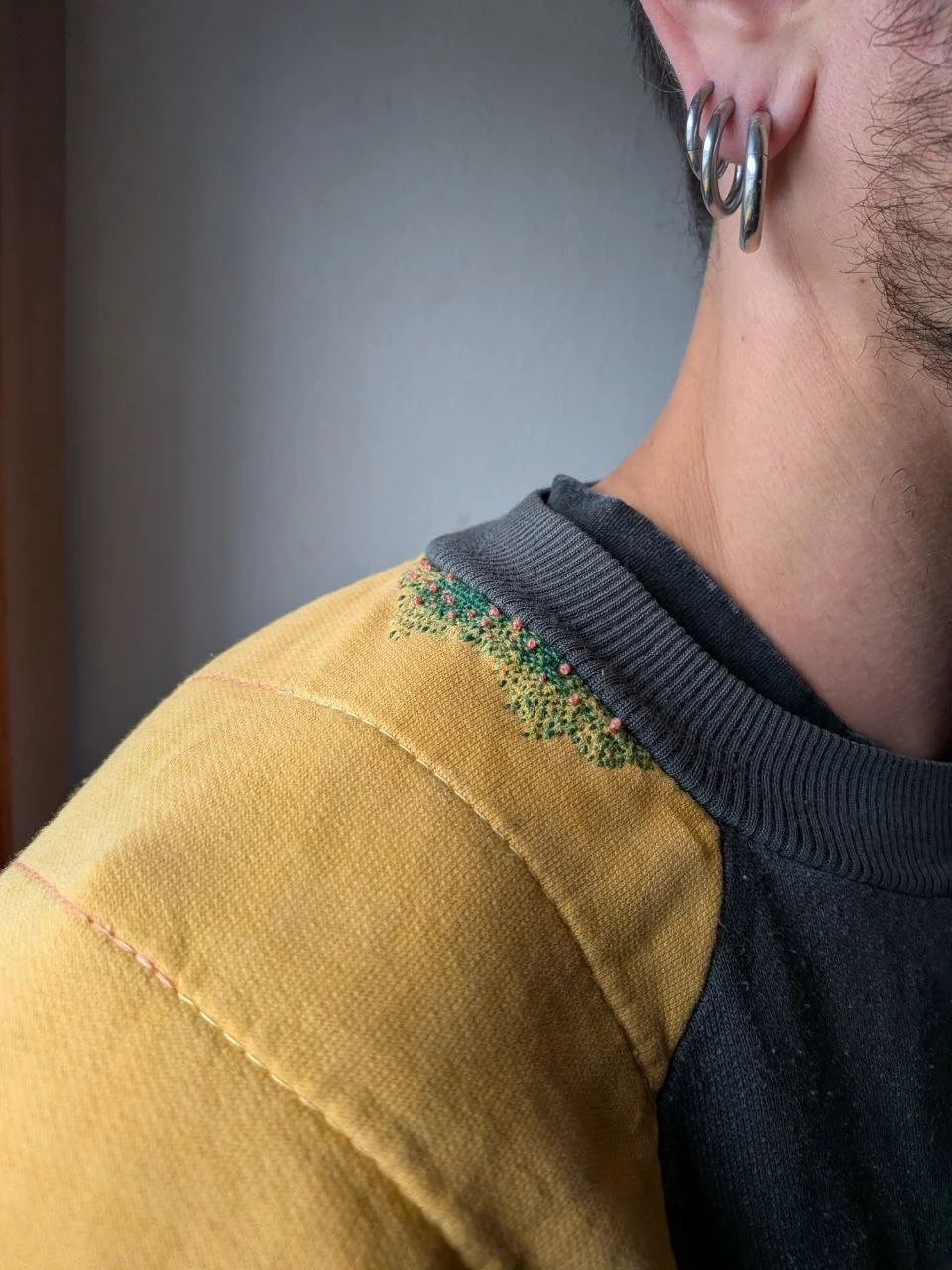
AB: I believe that sewing, being a language present in every culture and each of us having a memory or connection with textiles, lends itself particularly well to participatory processes. Fabric places us on a different level, where a new tactile and visual language can enable communication, where manual intelligence can reveal itself and create a new conviviality, made up of gestures, techniques, signs, and colors. I think a new sociality and intimacy forms around manual work, where eye contact is not necessary, nor is speech. The needle goes in and out, traversing the surface, taking us from one dimension to another in a repetitive act filled with presence. I like to define sewing as a subversive tool precisely for its ability to overturn and change the rules of the game. When we sew, we dwell in slowness, we are present, we communicate in another language. By practicing sewing, we can gain a deeper awareness of the clothes we wear every day. As stated by the DIY movement: "if you can’t open it, you don’t own it." Sewing offers us an alternative to consumption, one based on self-production and transformation.
h: What happens in a room when people come together to sew—especially people from different backgrounds or generations?
AB: As described earlier, I believe sewing places us on a different level; the social connections it creates overturn existing hierarchies and dynamics. It creates spaces where different generations and cultures meet, sharing skills and passing on knowledge that was once common but, after being marginalized and exploited to subjugate the female figure, is now finding new ground to spread again in society. I think its dissemination has multiple benefits, as fabric and clothing are strongly connected to ecology and the "skin" with which we present ourselves to others. Working as an educator at the Children's City Tailor Shop, where children play at being tailors, I experienced how starting from clothing and tailoring work, we can question many dynamics present in society. Discussions emerged about gender related to clothing, issues related to the image promoted by the fashion industry; we talked about self-production, repair, brands, and the exploitation hidden in the fabric of our clothes. Many children were native German speakers, and while sewing together, they taught me many new words, also proudly becoming my teachers.
In collective embroidery sessions, I create a setting where participants can become experts themselves; it's nice to swap roles. I learned a lot of techniques from women from Pakistan and Morocco, as well as from South Tyrol, which have become part of my artistic practice.
h: You reimagine clothing and materials and prolong their "lives". How do you think fashion can be both intentional and joyful, rather than fast and disposable?
AB: To me the term fashion is a concept that is strongly tied to temporality: trends pass, change, and with them the clothes that accompany them. Not by chance, what fascinates me strongly about clothing are traditional garments, where the materials and techniques used tell stories of places and cultures made to last. It struck me when wanting to widen a traditional Tyrolean garment, I discovered that in the seams of the hips, excess fabric had been left anticipating a possible future need to widen the garment, brilliant!
With my workshops, as with the artistic repair service, I try to convey a playful and creative approach hoping to make people fall in love with their clothes again and at the same time develop a sensitivity for fabrics and the possibilities offered by sewing.
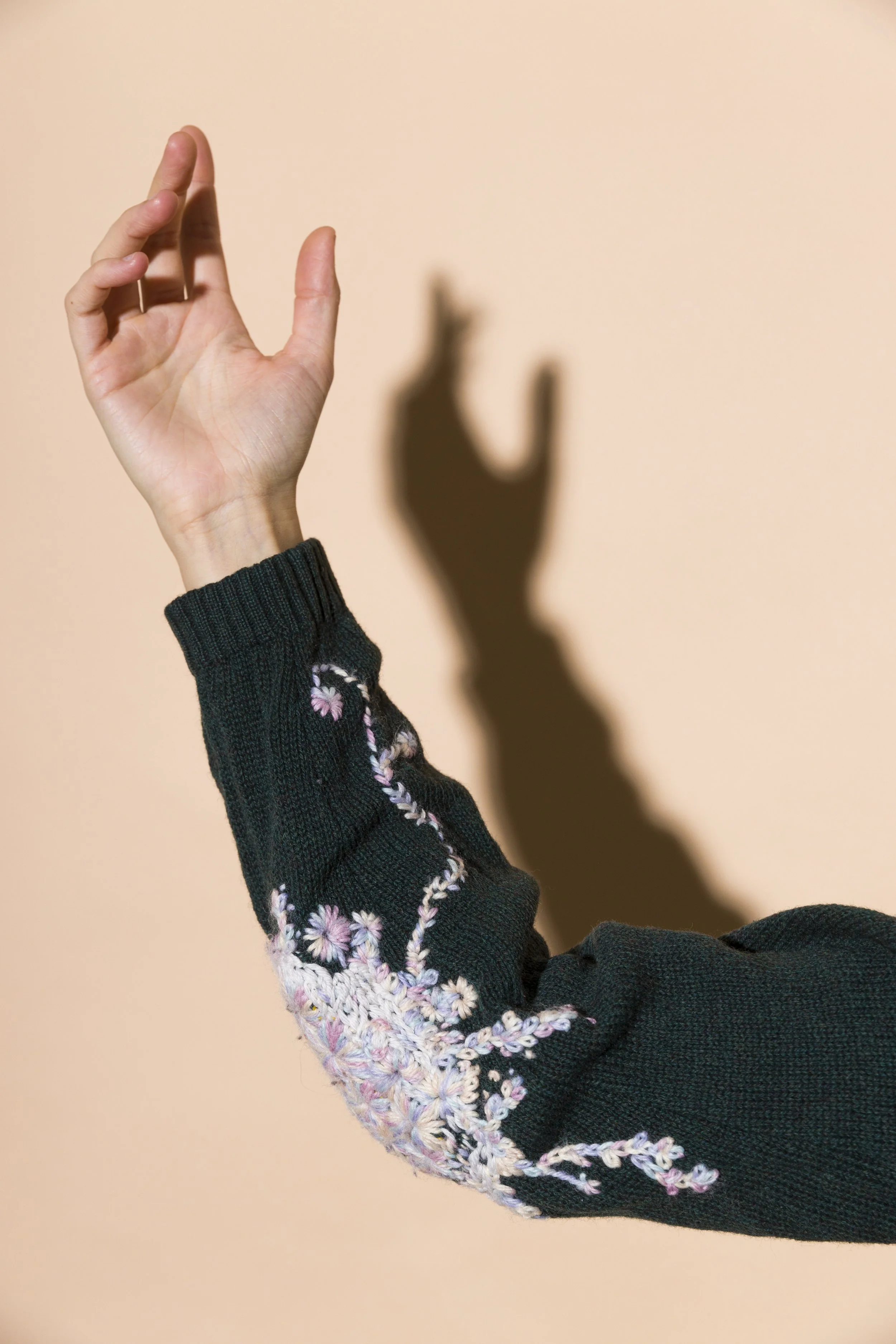
h: Sewing requires time, patience, and attention. Do you think this slowness is part of its power?
When I started sewing my first clothes for myself, I wanted the finished product as quickly as possible. This led me to do things imprecisely and to appreciate the imperfections just as they were. I remember the annoyance I felt when, as a child sewing my first things, I was told to baste and do all those steps that I considered useless at the time to be more precise. When I started teaching sewing, I made sure that in just a few actions (even imprecise ones), people could create something valuable and be fast and satisfied at the same time. An example was the scrunchies made from old silk ties—simple and quick, with all the crooked seams hidden inside, invisible to the eye.
After two years of mainly focusing on getting others to sew, I felt an urgent need to practice more myself. This renewed closeness to sewing has a different perspective: achieving a result as quickly as possible is no longer the priority. Instead, I focus on quality, finishing, and pay a lot of attention to details. Slowness has become part of my practice, but only after this journey that also included impatience and rebellion.
h: How has your work changed the way you live your own daily life?
AB: It's hard to define when work aligns with a lifelong passion. I believe that being able to work with sewing and giving it space in artistic, cultural, and community contexts has allowed me to develop deep connections with the land and the people who inhabit it. When I moved to Bolzano to study in the eco-social design master's program, I was looking for a space to sew in company, and I found a group of neighborhood ladies who became like aunts and grandmothers to me—people I enjoy taking refuge with on gray days, letting them pamper and lighten my mood. The same space where these ladies gathered later became my first paid job in a social tailoring workshop.
I think that creative work in everyday life helps me practice and stay curious about what I'm passionate about (on good days), and at the same time, it gives me the strength to transform the anger and frustration that can sometimes arise from confronting a system that rarely sees—and therefore struggles to recognize—the value of the designer-artist.
h: For someone who feels disconnected from making or creativity—where would you suggest they start?
AB: What I have observed during my workshops is that adults often have a block caused by the fear of not being good or capable enough, and that often, by doing things with others, this block can be overcome. In the workshops where I involve parents and children, many mothers tell me that they cannot sew, that they have tried and are a disaster. I have seen people change their minds and put themselves out there after seeing their six-year-old child try to sew. The same thing happens in group workshops; it seems to me that often it is other people who give us courage and help us appreciate our work.
Look for beauty in imperfection—in the crooked stitching, in the "ugly" drawing. Keep them, make a collection. Maybe in some time, they won’t seem so ugly anymore, or maybe you’ll notice an improvement. Right now, your lines aren’t just crooked—they’re super crooked!
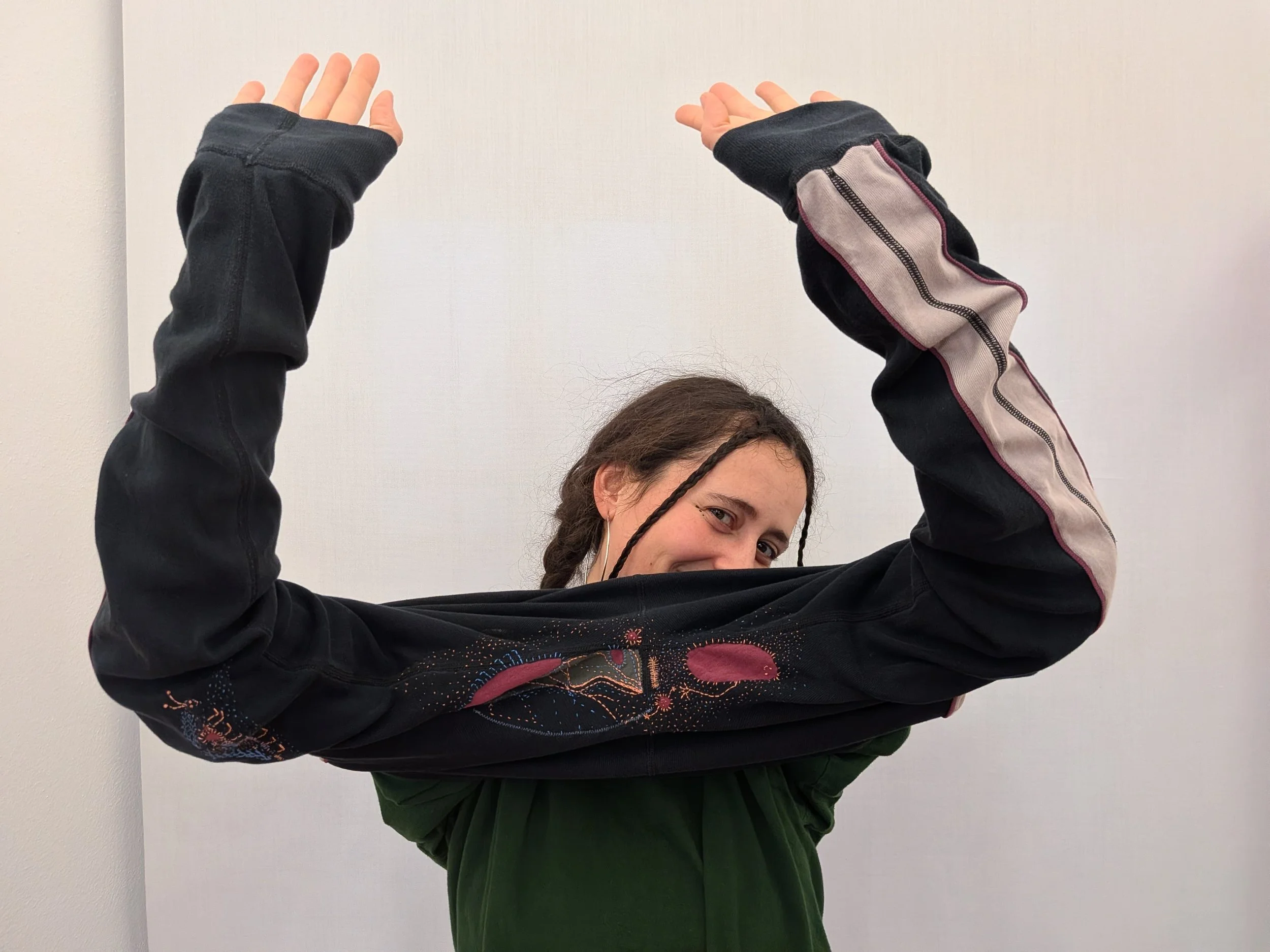
Adele
h: What helps you bloom—creatively or personally—especially during more challenging seasons?
Good question. I started again this year to write more about how I feel, my ideas and reflections, to create a lunar-menstrual calendar where I also note down things that bring me joy and can help me when everything seems gray. Sometimes writing them down helps to fix them almost as if to put them in a toolbox from which I can extract them when needed. I read to you from my diary:
writing down thoughts and emotions
reading poems by Chandra Candiani and Mariangela Gualtieri
watching Alice Rohrwacher's films and listening to her voice
painting very small cards that I can give to the people I love when the time comes
reading novels (no more essays!)
taking a hot bath
spending time with my friends and cooking delicious things
fermenting vegetables from my trusted farmers
visiting the sewing ladies on Thursdays and having tea with them
greeting the river and the mountain
h: Last but not least: What does a heiter moment look like to you?
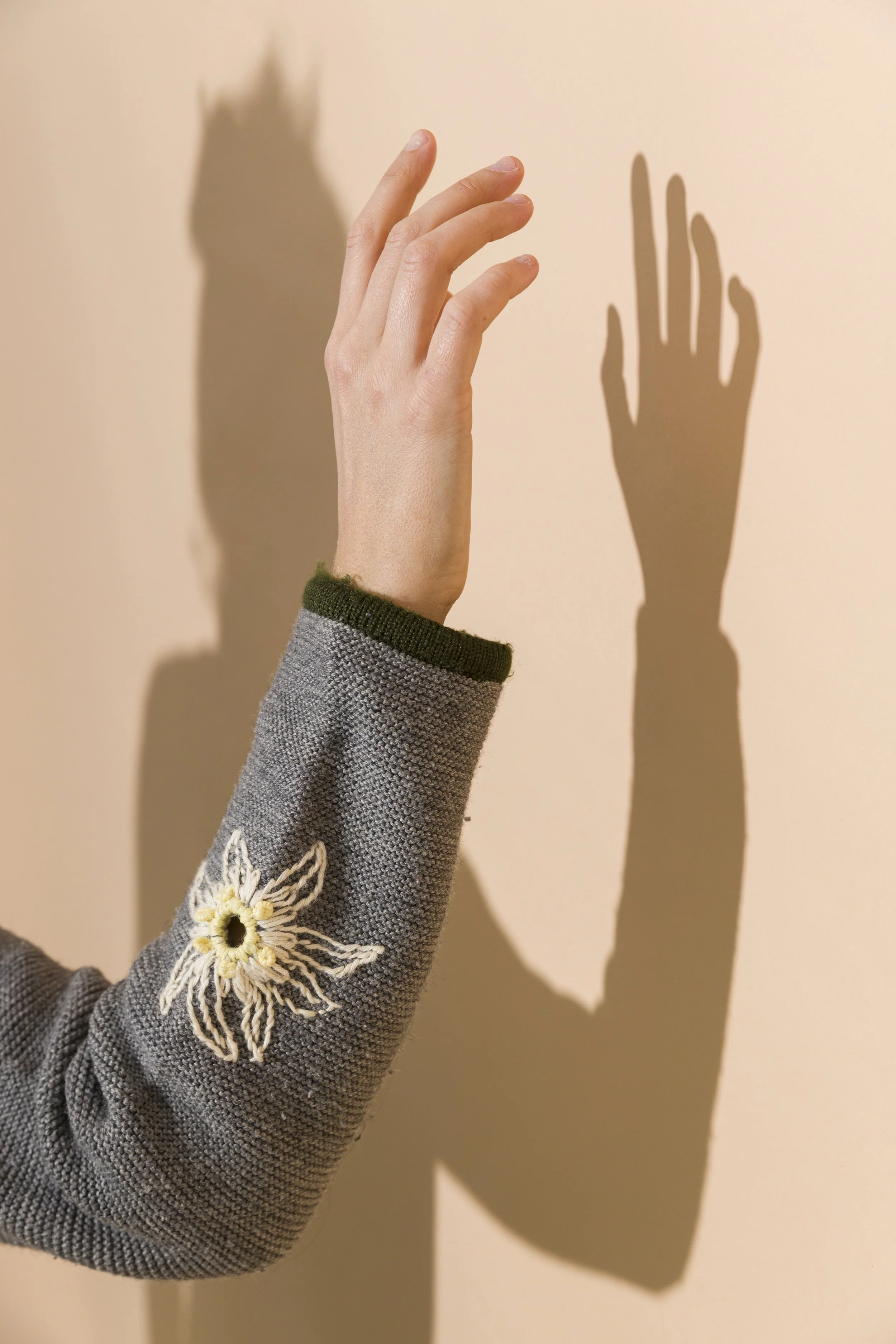
AB: I have a picture in my mind, dating back to February 2026. I had a particularly painful menstrual cycle that forced me, despite being in Barcelona on a trip, to stay home for two days and cancel all the visits I had planned. I accepted that walking around the city meant nausea and pain, and I retreated into my home, creating a cozy nest to feel better. When the pain subsided, I took off my pajamas and braided my hair, went outside, and there was sunshine—it felt like spring. I saw my shadow reflected, and I was so grateful to my body for functioning again and carrying me around to explore and discover new realities.
Adele is going to run “Ricamoriparo”, an online embroidery mending workshop for heiter. Do come and join us on Wednesday, 8th of April 2026 at 7pm UK time | 8pm CET. Discover all details on how to join and what to bring along here.